
Alabama Former Owners Across Record Eras
Alabama keeps no single roster of every past landowner. The deed chain lives at the county probate recording division where each transfer was filed. For older periods, a state land collection and the Alabama Department of Archives and History can bridge the gap. Ask one question first. Does the county hold an index, a digital image, an older book, or a filmed copy for the year you need? Those are different kinds of coverage, and each shapes the search differently.
| Source | Years It Covers | Where Held | What It Shows |
|---|---|---|---|
| Baldwin deed and mortgage index | 1899-present | Baldwin County Official Records Search | Indexed land instruments; the county says deed and mortgage indexing begins with Book 1. |
| Mobile deed books | 1813-1958 | Mobile County public-records list | Older deed-book entries; confirm the book and image access separately. |
| Mobile index and image runs | Index 1984-present; images September 1995-present | Mobile County public-records list | Index results may reach years that do not have a portal image. |
| Secretary of State Lands | Statehood through 1950 | Alabama Secretary of State | Early land records searchable by name, township/range/section, or book. |
| ADAH county microfilm | County and record type vary | Alabama Department of Archives and History and local holdings | Filmed deeds and other selected county records; most originals stay local. |
| Historic plats and tax rolls | County-specific | County probate, revenue office, archive, or library | Parcel continuity and lot history clues, not a complete deed chain. |
The time range has to be checked county by county. Mobile lists a land-record run that begins before Alabama statehood. Baldwin reports an online index starting in 1899. The state Lands collection covers yet another period. Deeds recorded after 1950 lead back to the local probate layer. A former-owner search often needs more than one source. It may have to cross from an image portal into a book or microfilm record.
Trace Alabama Deed Chain Backward
A former-owner search walks backward, one recorded transfer at a time. Begin with the last deed tied to the parcel. From the image, read the grantee, grantor, legal description, date, and any prior instrument reference. Then use the land description to confirm the next result concerns the same property. The parcel number may have changed. Older deeds were recorded under identifiers that no longer match today's numbering.
- Take the most recent deed linked to the parcel and record its legal description, recording reference, date, grantor, and grantee.
- Use the grantor as the next name to search in the grantee role. Search spelling and name variations when the county guide recommends it.
- Compare the older deed's land description and prior-reference field with the parcel and deed you started from. Keep a note of every book/page or instrument number.
- Repeat the step through each matching transfer. Stop when the reference changes to a book, index, or year that is not available online.
- Ask the county or archive which physical book, microfilm run, or state land record covers the next period, then continue from that record's reference.
A representative Alabama deed-index result may supply several clues for the next transfer:
- The indexed party and role, with the other party where the portal shows it.
- A document or reception number, document type, and recording date.
- Book and page, or map book and page for a plat reference.
- A legal description using lot/block/subdivision or metes-and-bounds terms.
- A prior or related instrument reference and the image-access route.
- Any redaction or image limit the county portal displays.
- Grantor
- The party named as conveying the interest in that transfer.
- Grantee
- The party named as receiving the interest in that transfer.
- Chain of title
- The ordered sequence of recorded transfers and related land interests.
- Legal description
- The land description carried in a deed or plat; it can remain useful when a street address changes.
- Warranty / quitclaim
- Different deed labels in the index; read the document terms rather than assuming both labels mean the same thing.
The sequence is the real goal. One deed leads to the one before it, reference by reference. To pull a deed image or request a certified copy, follow the county's record and copy route described on the Alabama deed records page.
Baldwin, Alabama's 1899 Index Start
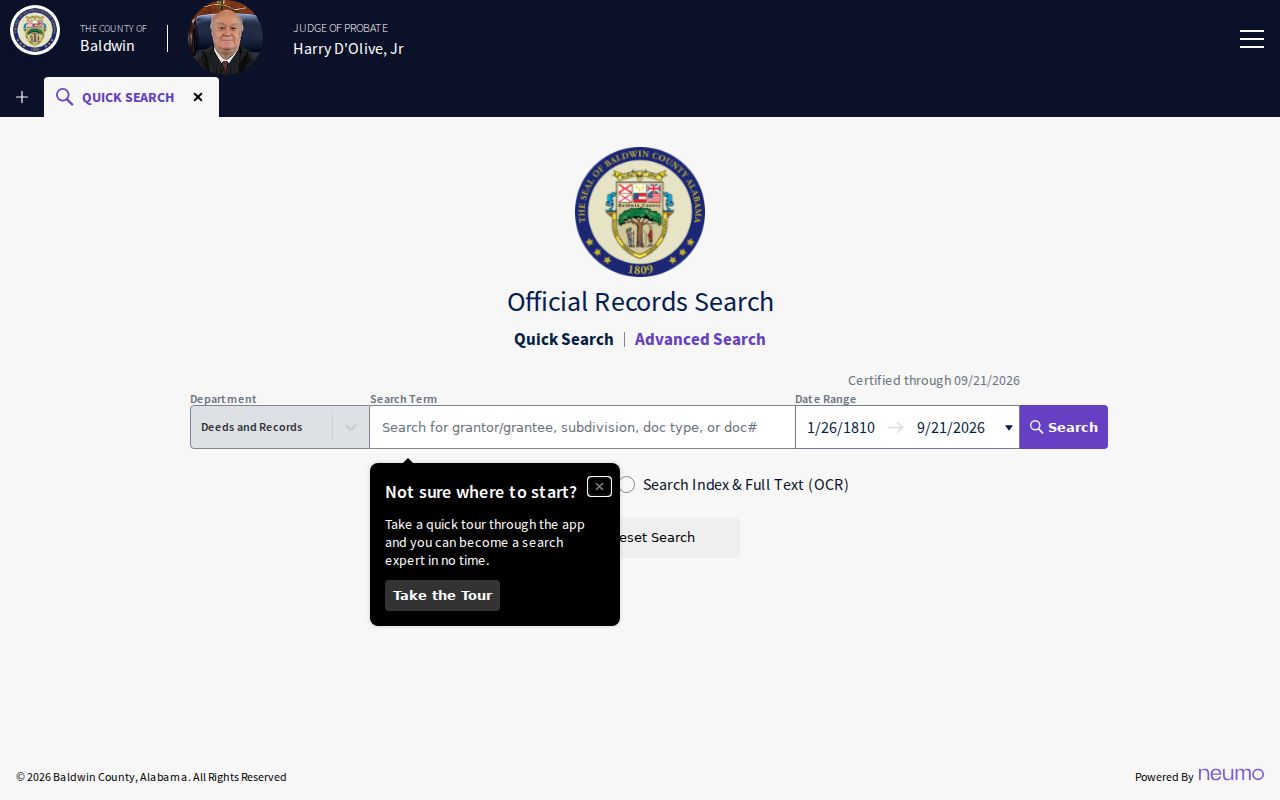
Baldwin County's recording page reports a deed and mortgage index. It opens with Book 1 in 1899 and runs to the present. Documents can be viewed and printed through the county's online system. For Baldwin former owners, that sets an online index start. It does not promise that every older local land record sits in the same portal. The earlier period belongs with the county's recording office and its archive holdings.
The portal index points to parties and recording references. Use the exact reference from one result. That helps when stepping from a current transfer to an older one. Compare legal descriptions before treating two entries as the same parcel.
Baldwin's Official Records Search offers a searchable county record index. That makes a practical starting point for building a deed chain. The 1899 coverage statement itself comes from the county's recording information.
If the earliest link predates the online start, don't assume the chain began in 1899. Rely on the county's own book, index, and microfilm information for the older period.
Mobile, Alabama's Longer Paper Trail
Mobile County's published record ranges show why former-owner research needs separate dates for books, indexes, and images. Deed books run from 1813 through 1958. Map books start in 1872 and continue to the present, mortgage books span 1851 through 1958, and real-property books pick up in 1958. The listed index run begins in 1984. Document images begin in September 1995. These are Mobile-specific ranges, not an Alabama statewide rule.
The Mobile Probate Records Division page lays out its book, index, and image coverage. A historic index entry can still lead to a book reference even when its scan falls outside the online image range.
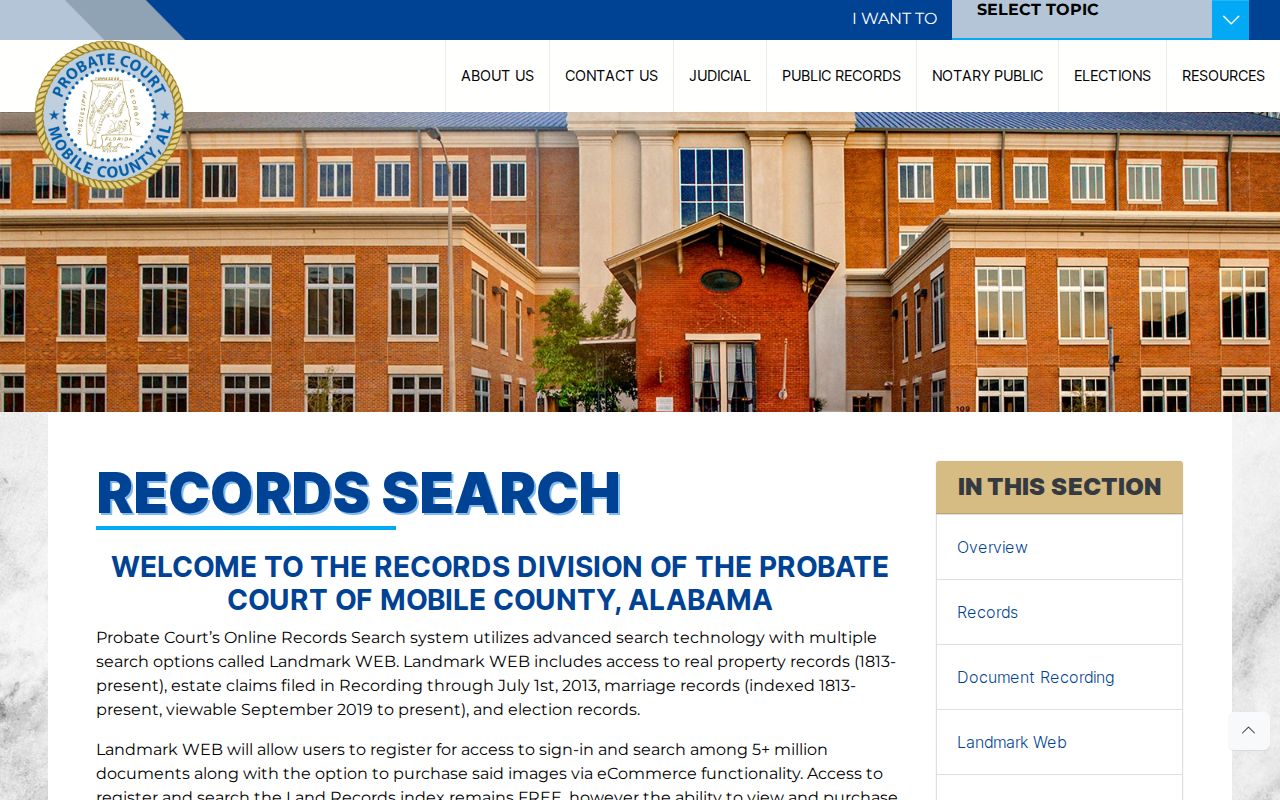
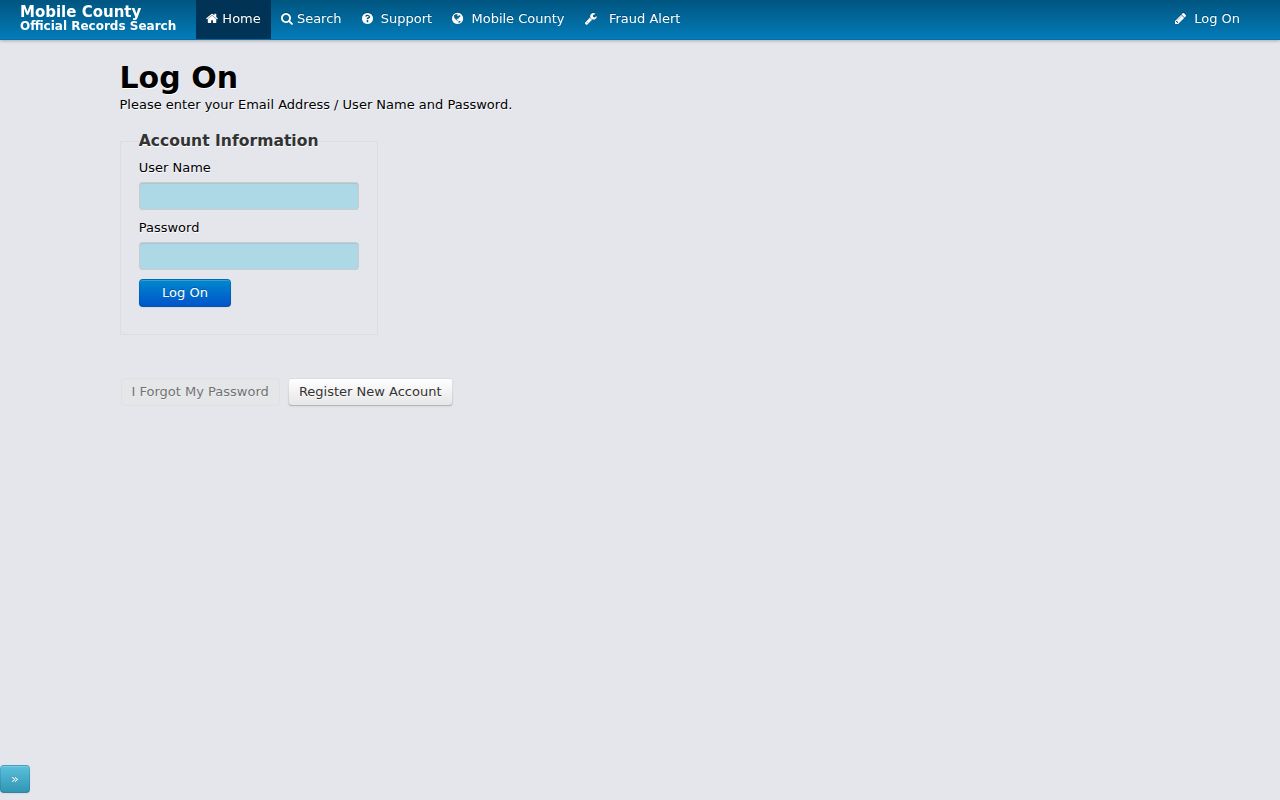
Mobile lists its public index search as free. Image pages cost $0.10 each, and purchased images stay available to download or print for ten days. A monthly subscription is listed at $125 for high-volume access. The Landmark Web search is the current portal surface. Its Book and Page mode requires both fields. Entering Page 1 returns all pages for a book.
Landmark Web is the entry point, not the full archive. When an index reference falls before the image run, ask the county how to view the source book or order a local copy.
Note: Track the index year, deed-book year, and image availability as three separate facts throughout the search.
Alabama Land Records Through 1950
Alabama's Secretary of State holds a Lands collection spanning statehood through 1950. You can search it three ways. Try a name, a township, range, and section, or a book. For records after 1950, the state's own page points searchers elsewhere. That pointer goes to the county probate judge's office. Think of it as a bridge across the earliest era of Alabama property records. It is not a substitute for a county deed index that covers every year.
Keep your land description and party spelling consistent with the county record. A name search may surface an early land entry. Township, range, and section narrow things further for rural parcels. When the trail ends at a state-era reference, go back to the county set for later transfers. Compare the descriptions where the two systems meet so nothing slips through the handoff.
The Secretary of State's Lands coverage page spells out the post-1950 handoff to county offices. If a former-owner chain crosses both systems, keep the citations from each side intact.
ADAH Microfilm for Older Owners
ADAH keeps a County Records on Microfilm database. Pick a county, then pick a record type. Every Alabama county appears, though years and record types vary; some filmed material predates statehood, and many runs extend into the 1950s. Most originals still sit with the county that created them. Search the catalog to see what was filmed, then confirm which office holds the original book or index.
ADAH also publishes a courthouse-fire list and map by county. A fire does not mean the whole deed chain burned. Duplicates, later re-recordings, microfilm, reconstructed indexes, newspaper notices, tax rolls, and a later deed reciting an earlier transfer can each bridge part of a gap. Identify the exact county and series before claiming anything is missing.
A 2025 ADAH assessment of probate offices flags storage, preservation, environmental controls, staff training, and digitization as ongoing needs statewide. It makes a practical point worth remembering: an online gap may reflect preservation or system limits rather than a missing deed. The ADAH probate-office assessment gives that statewide context.
For an archival request, give the county, record type, surname, book and page or land description, and the period. ADAH's research-request service charges $15 for Alabama residents and $25 out of state, includes up to twenty pages, and adds $0.25 per additional copy. One surname goes on each form. Staff search up to four sources, and a mailed response typically takes two to three weeks.
Alabama Plats and Parcel Descriptions
An old deed rarely carries a modern street address or parcel number. The link to the next instrument comes from the legal description, subdivision, lot and block, map book, and prior deed reference. Parcel numbers also shift as land is split or combined. Treat the number as an index clue, not something an older deed will match.
Historic plats, replats, vacations, and lot-line records show how a present parcel took shape. Search land records by subdivision, developer or earlier owner, lot and block, and the map-book reference. Then set the plat's description beside the deed and the later parcel record. A plat can reveal a road, easement, common area, or restriction. No assessor map makes that clear on its own.
The Alabama Historical Commission's old-building research guide urges recording each grantor and deed-book reference. That habit keeps a former-owner search anchored to the same land. It holds even after the address or lot name changes.
Alabama Address Histories in Directories
City directories can tie a former name to an address and a year. A typical entry lists the resident, a spouse notation, and a business or occupation. It may also give an apartment or room number. Some add an owner, renter, or widow note. Publishers used their own abbreviations. A directory may also reflect an address from before a street was renamed or renumbered.
Find the volumes through a library local-history room. You can also try an ADAH collection or a licensed directory database. Trace one address across nearby years and check the street index or key. Newspapers add subdivision advertisements, sale notices, probate notices, and renumbering announcements. Record the source year, city boundary, publisher, and directory call number. That lets another researcher find the same entry.
Remember what a directory proves. It ties a person to an address, not to title. An occupant, renter, business, or household member may appear in it. The deed may name someone else entirely. Use the entry to pick a name or year for the property-record search. Then confirm ownership in the deed chain itself.
How Far Back Alabama Ownership Records Go
No single starting date fits every Alabama county. Mobile's deed books begin in 1813. Baldwin's online deed and mortgage index starts in 1899. The Secretary of State's Lands collection runs through 1950. ADAH's microfilm dates depend on the county and record type. A county may also hold a book whose index or image never went online. Treat each cutoff as a handoff to another source. It is not the end of ownership history.
When the chain stops, write down the last verified deed. Note its grantor, grantee, legal description, recording reference, and year. Ask the probate office which older index and book cover the next period. Check the ADAH catalog after that. Then check the state Lands collection if the date falls in its range. Where a courthouse fire marks the local history, confirm which exact series was affected. Hunt for surviving copies and later references.
Use the chain for the property. Former-owner research can support a house history, title review, estate work, or property diligence. Keep the search tied to the land and its records; a directory entry is not a basis for targeting a living person.
Former owners reflect a property's recorded past, not every person who ever lived there. For a transaction, inheritance, or boundary dispute, rely on the complete deed chain and related filings. A qualified title professional, surveyor, or attorney can help you read them.